
 German
  Spanish
  French
  Swedish
  Russian
15 vs. 20 Degrees: Which Kitchen Knife Angle is Better?
Chef Knife Sharpening Angles
Using a dull knife is riskier than using a sharp one. Applying excessive force with a blunt blade can result in slips or breaks, creating potential for injury. For safety, it's paramount to keep a knife sharp; not only does it require less force, but it also promotes careful handling.
Understanding the Basics
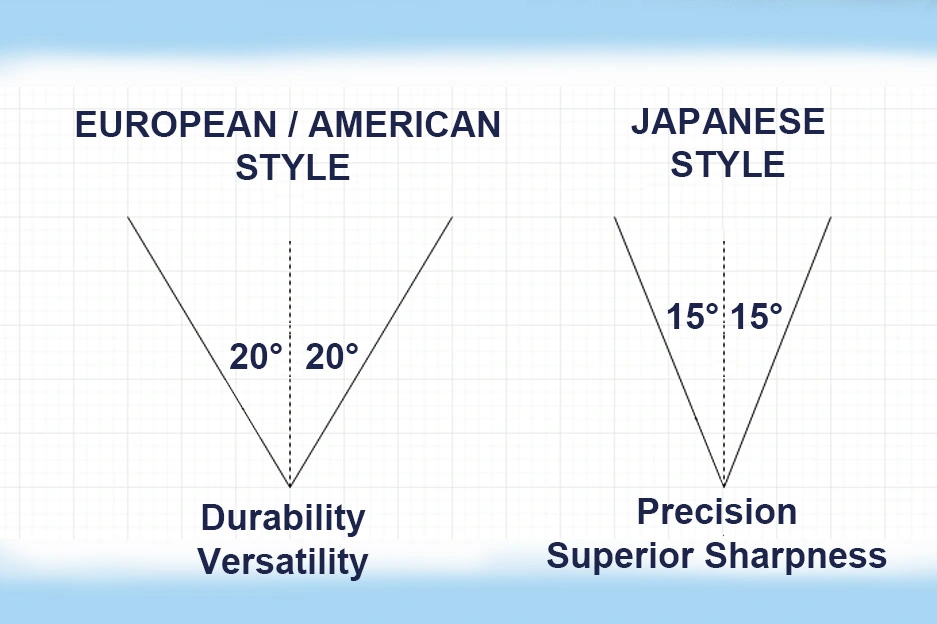
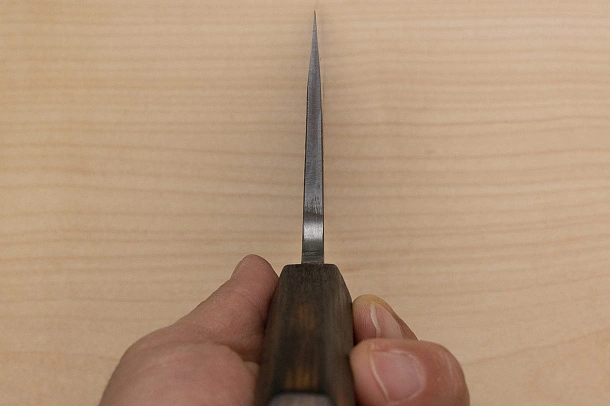
Knife Angles For clarity, when discussing the chef knife sharpening angle, we refer to the angle between the blade's centerline and sharpened edge. This angle influences the thickness of the blade's cutting edge. While a narrower angle often results in a sharper knife, sharpness isn't the sole factor to consider. The most commonly used sharpening angles are 15 and 20 degrees.
15 vs. 20 Degree Angles
The 15-degree Blade (Japanese / Asian Style): Precision and Superior Sharpness
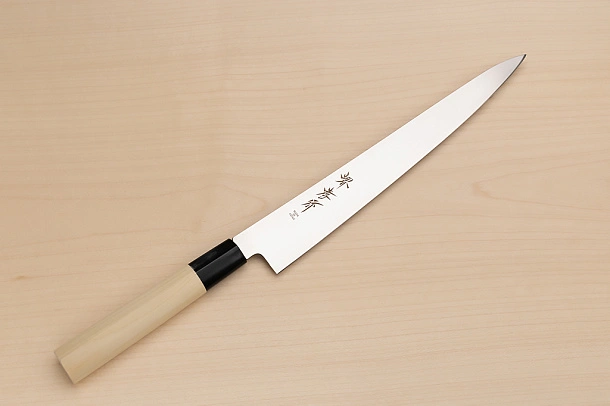
The 15° angle produces an exceptionally sharp edge, perfect for precise tasks like filleting fish or slicing sushi.
Precision Cuts: A 15° blade ensures meticulous cuts, paramount for gourmet dishes where presentation is as crucial as taste.
Less Effort: A sharper edge reduces the required force during food prep, saving effort and time.
However, the fragility of a 15° edge might render it unsuitable for heavy-duty tasks, such as cutting through bones.
The 20-degree Blade (Common in Western/American Knives): Durability and Versatility
The 20° blade might be marginally less sharp, it boasts greater durability, decreasing the likelihood of chipping and preserving its sharpness over time. Versatility: It's tailored for various tasks, from dicing meat to chopping vegetables.
Longevity: It generally demands less frequent honing, given its sturdier composition.
Emerging Trends in European Kitchen Knives
Many top-tier European knife makers have recently gravitated towards the 15° blade for their traditional European knife collections. This shift reflects consumer preferences, with many finding the 15° angle perceptibly sharper. Both angles have their merits, but the 15°, especially when paired with a slender blade design, offers reduced cutting friction, giving a sensation of increased sharpness.
In light of this trend, several European knife manufacturers have recently introduced electric and manual sharpeners tailored for Asian-style knives. They've innovated tools that can easily transition traditional 20° blades to 15°.
A notable drawback of the 15-degree blade is its susceptibility to wear, as knife edges often degrade due to folding. The amount of metal supporting the edge determines its durability. Consequently, the 15-degree edge, having less metal support than the 20-degree variant, is prone to wear faster. However, this limitation can be counterbalanced using premium steels that offer superior hardness.
It's also vital to recognize that different blade materials respond uniquely to sharpening:
Standard Stainless Steel: Often chosen for modern knives, this material is softer compared to high-end steels like ZDP189 or VG10. This softness eases the sharpening process, but the edge might need regular honing to remain sharp.
Carbon Steel: Generally harder than standard stainless steel, carbon steel retains its edge for longer but can rust without proper care.
Ceramic: Exceptionally hard ceramic blades keep their sharpness for extended durations. However, they're susceptible to chipping, and sharpening them requires a specialized diamond stone.
Which Angle is Best for You?
Your preferred sharpening angle should align with your cooking style and tasks. If precision and intricate dishes are your focus, the 15-degree blade may suit you best. On the other hand, if your culinary endeavors involve everyday tasks or robust ingredients, a 20-degree edge might be more appropriate. Experienced chefs often have both types at their disposal for versatility.
How to Determine If Your Knife Needs Sharpening
To assess your knife's sharpness, consider these tests:
Paper Test - Holding a sheet of paper, try slicing it. A sharp blade will cleanly cut through, while a dull one might cause the paper to tear.
Tomato Test: If, when slicing a ripe tomato, your knife squashes instead of cleanly slicing, it's time for sharpening. Fingernail Test: Gently place the blade against your fingernail. A dull edge will slide without resistance.
Conclusion
The sharpening angle of your kitchen knife plays a significant role in your culinary experience. Whether you prefer the precision of a 15-degree blade or the resilience of a 20-degree edge, maintaining it is paramount. Regular honing and appropriate sharpening techniques ensure your blade remains in optimal condition, enhancing every culinary endeavor.
Using a dull knife is riskier than using a sharp one. Applying excessive force with a blunt blade can result in slips or breaks, creating potential for injury. For safety, it's paramount to keep a knife sharp; not only does it require less force, but it also promotes careful handling.
Understanding the Basics
Knife Angles For clarity, when discussing the chef knife sharpening angle, we refer to the angle between the blade's centerline and sharpened edge. This angle influences the thickness of the blade's cutting edge. While a narrower angle often results in a sharper knife, sharpness isn't the sole factor to consider. The most commonly used sharpening angles are 15 and 20 degrees.
15 vs. 20 Degree Angles
The 15-degree Blade (Japanese / Asian Style): Precision and Superior Sharpness
The 15° angle produces an exceptionally sharp edge, perfect for precise tasks like filleting fish or slicing sushi.
Precision Cuts: A 15° blade ensures meticulous cuts, paramount for gourmet dishes where presentation is as crucial as taste.
Less Effort: A sharper edge reduces the required force during food prep, saving effort and time.
However, the fragility of a 15° edge might render it unsuitable for heavy-duty tasks, such as cutting through bones.
The 20-degree Blade (Common in Western/American Knives): Durability and Versatility
The 20° blade might be marginally less sharp, it boasts greater durability, decreasing the likelihood of chipping and preserving its sharpness over time. Versatility: It's tailored for various tasks, from dicing meat to chopping vegetables.
Longevity: It generally demands less frequent honing, given its sturdier composition.
Emerging Trends in European Kitchen Knives
Many top-tier European knife makers have recently gravitated towards the 15° blade for their traditional European knife collections. This shift reflects consumer preferences, with many finding the 15° angle perceptibly sharper. Both angles have their merits, but the 15°, especially when paired with a slender blade design, offers reduced cutting friction, giving a sensation of increased sharpness.
In light of this trend, several European knife manufacturers have recently introduced electric and manual sharpeners tailored for Asian-style knives. They've innovated tools that can easily transition traditional 20° blades to 15°.
A notable drawback of the 15-degree blade is its susceptibility to wear, as knife edges often degrade due to folding. The amount of metal supporting the edge determines its durability. Consequently, the 15-degree edge, having less metal support than the 20-degree variant, is prone to wear faster. However, this limitation can be counterbalanced using premium steels that offer superior hardness.
It's also vital to recognize that different blade materials respond uniquely to sharpening:
Standard Stainless Steel: Often chosen for modern knives, this material is softer compared to high-end steels like ZDP189 or VG10. This softness eases the sharpening process, but the edge might need regular honing to remain sharp.
Carbon Steel: Generally harder than standard stainless steel, carbon steel retains its edge for longer but can rust without proper care.
Ceramic: Exceptionally hard ceramic blades keep their sharpness for extended durations. However, they're susceptible to chipping, and sharpening them requires a specialized diamond stone.
Which Angle is Best for You?
Your preferred sharpening angle should align with your cooking style and tasks. If precision and intricate dishes are your focus, the 15-degree blade may suit you best. On the other hand, if your culinary endeavors involve everyday tasks or robust ingredients, a 20-degree edge might be more appropriate. Experienced chefs often have both types at their disposal for versatility.
How to Determine If Your Knife Needs Sharpening
To assess your knife's sharpness, consider these tests:
Paper Test - Holding a sheet of paper, try slicing it. A sharp blade will cleanly cut through, while a dull one might cause the paper to tear.
Tomato Test: If, when slicing a ripe tomato, your knife squashes instead of cleanly slicing, it's time for sharpening. Fingernail Test: Gently place the blade against your fingernail. A dull edge will slide without resistance.
Conclusion
The sharpening angle of your kitchen knife plays a significant role in your culinary experience. Whether you prefer the precision of a 15-degree blade or the resilience of a 20-degree edge, maintaining it is paramount. Regular honing and appropriate sharpening techniques ensure your blade remains in optimal condition, enhancing every culinary endeavor.
POST COMMENTS
0 COMMENT(S)